

Table of Contents
- Why Standard Formal Wear Fails in the Heat
- The Best Fabrics for North Queensland Formal Wear
- Breathable Formal Dresses for Humid Weather
- How to Stay Cool in Formal Attire: Construction and Fit
- Colour Palettes and Accessories That Work in the Heat
- Formal Footwear for Hot Weather Events
- Fabric Care and Travel Tips for Summer Formal Wear
- Frequently Asked Questions
Last Updated: September 18, 2026
Why Standard Formal Wear Fails in the Heat
Formal wear for hot weather is clothing engineered to keep you comfortable at a wedding, cocktail party or black-tie event when the temperature climbs and the humidity refuses to budge. Most formal attire, however, is built for cold rooms and mild climates.
The Best Fabrics for North Queensland Formal Wear
The best fabrics for North Queensland formal wear are lightweight, natural fibres with an open weave: linen, tropical-weight wool, high-twist wool, cotton and cotton-linen blends. They let air move across the skin and wick moisture away rather than trapping it.
Natural Fibres That Breathe
Linen is the classic hot-weather choice. It moves air freely, dries quickly and softens with every wear. Its one flaw is wrinkling, which is why blends exist.
- Cotton-linen blend: keeps the airflow of linen with a tidier drape
- Silk organza and chiffon: feather-light for dresses and overlays
- Pure cotton: breathable and easy to care for, though it creases
High-Twist and Tropical-Weight Wool
Tropical-weight wool is a fine, loosely woven suiting made for warm climates. High-twist wool takes this further: tightly twisted yarn adds wrinkle resistance and a dry, crisp hand feel while staying light.
Breathable Formal Dresses for Humid Weather
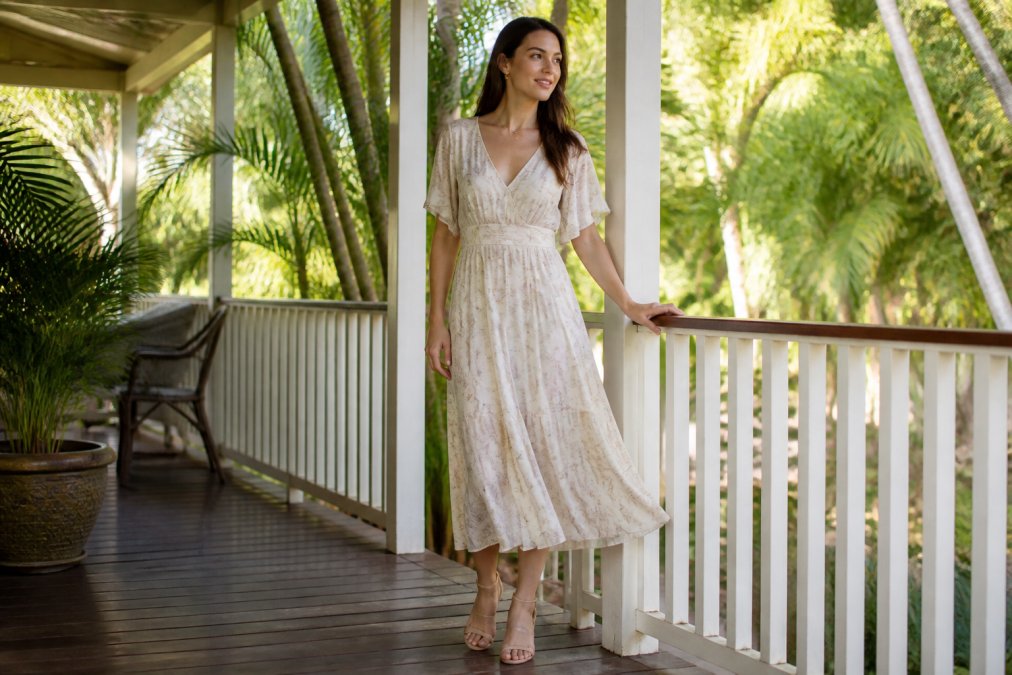
Breathable formal dresses for humid weather share three traits: light natural fibres, a relaxed or A-line silhouette, and minimal lining. Look for chiffon, cotton-linen, silk organza and unlined or partially lined construction, and favour midi lengths that let air circulate.
How to Stay Cool in Formal Attire: Construction and Fit
Knowing how to stay cool in formal attire comes down to construction and fit. An unlined or half-lined blazer, a looser tailored fit and open necklines increase ventilation, while tight garments reduce air circulation and trap heat.
A simple framework for judging any formal piece:
- Lining: unlined or half-lined beats fully lined for heat
- Fit: tailored and skimmed beats tight
- Weight: lightweight beats mid-weight
- Layers: fewer, thinner layers beat one heavy one
Colour Palettes and Accessories That Work in the Heat
Light-coloured formal wear reflects more of the sun's energy than dark colours, which absorb it and re-radiate warmth toward the body. That is why pastel shades, cream, stone, sand and soft blue feel noticeably cooler in direct sun, and photograph well in bright summer light. But colour is only one lever, heat management depends on evaporative cooling, and anything that blocks airflow or traps moisture undoes the benefit of a pale palette.
Why Colour Matters More Than Most People Think
A dark navy or black suit in full sun can feel several degrees warmer than the same cut in stone or cream, because the fabric absorbs a wider band of solar radiation. For daytime weddings, garden parties and outdoor ceremonies, favour light neutrals and muted pastels; save black and deep navy for air-conditioned evening venues. If you want dark tones in the heat, choose an open-weave tropical wool or high-twist wool in a lighter shade of the same hue, charcoal over black, mid-blue over navy.
The Accessories That Quietly Ruin Heat Management
Accessories are where summer formal dressing most often fails, because they sit against the body and block the two cooling mechanisms that matter: airflow and evaporation.
- Heavy leather belts: a wide, stiff belt traps warmth at the waist and interrupts the drape of a jacket or dress. Swap for a slim, unlined leather belt in a light tone, or choose side-adjuster trousers and skip the belt entirely.
- Thick silk ties: a heavy tie adds a layer over the chest and reduces airflow through the shirt placket. For daytime events, an open collar or a lightweight linen or cotton tie in a loose four-in-hand knot works better. For black-tie, a lighter-weight bow tie or a simple necklace is more comfortable than anything bulky.
- Pocket squares and lapel pins: these are fine, they add formality without adding heat, because they sit away from the skin.
- Heavy jewellery: chunky metal necklaces and thick bangles hold warmth against the skin. Choose fine chains, small studs or a single statement piece in a light metal.
- Structured undergarments: shapewear and heavily boned bodices trap heat. A well-cut dress in a breathable fabric does the same job with less insulation.
A Practical Palette Framework
| Element | Choose | Avoid |
|---|---|---|
| Colour | Pastels, cream, stone, sand, soft blue | Black, deep navy for daytime |
| Fabric | Linen, tropical wool, high-twist wool, cotton-linen | Heavy synthetics, fully lined polyester |
| Layers | Removable wraps, unlined jackets | Fixed heavy layers, thick ties |
| Accessories | Minimal jewellery, slim belts, pocket squares | Heavy belts, thick silk ties, chunky metal |
| Footwear | Light-coloured leather, open-weave uppers | Heavy platforms, synthetic uppers |
Styling Without Sacrificing Formality
The goal is not to strip formality away, it is to move it to places that do not trap heat. A linen suit in stone with an open collar and a pocket square reads as formal at a daytime wedding; a chiffon midi dress in soft blue with fine jewellery and a light wrap reads as formal at a cocktail reception.
Pasduchas Valerie Shoulder Midi in →
Formal Footwear for Hot Weather Events
Formal footwear for hot weather should prioritise breathable materials and a shape that lets your feet stay cool. Genuine leather breathes far better than synthetic uppers, and a closed-toe heel in a light colour pairs with almost any summer formal outfit.
Fabric Care and Travel Tips for Summer Formal Wear
Summer formal fabrics need gentle care to stay in shape and smart packing to arrive without creases. This section covers maintaining them in humidity, travelling with them, and choosing options that are both inclusive and lower impact.
Caring for Linen, Tropical Wool and High-Twist Wool in Humidity
Humidity is harder on formal fabrics than heat alone, because moisture sits in the fibre and encourages odour, mildew and loss of shape.
- Linen: hand wash cool or dry clean, line dry in the shade, and iron on the reverse while slightly damp. Linen will crease no matter what you do, treat that texture as part of its character rather than a flaw to fight. Never tumble dry.
- Tropical-weight wool: dry clean sparingly, because frequent cleaning strips the natural lanolin that helps the fibre regulate temperature. Between wears, hang it in a well-ventilated room for 24 hours to let moisture evaporate. A soft bristle brush removes surface dust without driving it into the weave.
- High-twist wool: the tight twist makes it more resilient, but it still benefits from hanging rather than folding. A light steam, not a hot iron, relaxes creases without flattening the crisp hand feel.
- Cotton-linen blends: machine wash cool on a gentle cycle, line dry in shade, and iron on the reverse. Blends crease less than pure linen but still prefer a cool iron.
- Silk chiffon and organza: hand wash cool with a pH-neutral detergent or dry clean. Store folded in acid-free tissue, away from direct light, which yellows silk over time.
Packing Formal Wear for Hot Destinations
Packing for a hot-weather formal event is its own skill, because the fabrics that breathe best also crease most.
- Roll, don't fold: roll lightweight pieces, linen shirts, chiffon dresses, tropical wool trousers, to reduce hard creases. For structured jackets, turn them inside out, fold along the back seam, and place them on top of the case.
- Use packing cubes: separate fabrics so heavier items do not press creases into lighter ones.
- Pack a travel steamer, not an iron: a small steamer relaxes creases without scorching delicate fibres, and it works in a hotel room without an ironing board.
- Wear your heaviest piece on the plane: a tropical wool jacket worn in transit saves space and arrives with fewer creases than one packed flat.
- Carry a stain pen: humidity makes spills spread faster, and a quick treatment before the stain sets saves a dry-cleaning trip.
Gender-Neutral Formal Wear for Hot Weather
Most summer formal guides are written for men, but the same principles, light natural fibres, unlined or half-lined construction, loose tailoring, light colour, apply to anyone. Gender-neutral options are increasingly easy to find in breathable fabrics:
- Unstructured blazers in linen or tropical wool, cut straight through the body, work over a dress, a shirt or a jumpsuit.
- Wide-leg trousers in high-twist wool or cotton-linen allow air to circulate around the legs and read as formal when paired with a crisp shirt.
- Jumpsuits in silk crepe or cotton-linen offer a single-piece formal option with no waistband to trap heat.
- Open-collar shirts in linen or cotton voile replace the tie without losing formality at daytime events.
Sustainable Summer Fabrics
Eco-conscious buyers have more options than ever, and the most sustainable choices are also the coolest. Natural linen, organic cotton, Tencel lyocell and responsibly sourced tropical wool all breathe better than synthetic blends and biodegrade at end of life. Look for certifications such as Global Organic Textile Standard (GOTS) for cotton and Responsible Wool Standard (RWS) for wool, and favour pieces with minimal lining, which is often the least breathable and least recyclable component.
Frequently Asked Questions
How to dress elegantly in hot weather?
Choose breathable fabrics like linen, cotton, and tropical-weight wool over heavy synthetics. Opt for lighter colours that reflect heat, and select loose or tailored fits that allow air circulation. A well-constructed unlined blazer or a flowing midi dress in a natural fibre can look polished without causing overheating. Accessories should be minimal, and footwear should prioritise comfort alongside style.
What are the best fabrics for formal wear in North Queensland?
Linen, cotton-linen blends, silk, and high-twist tropical-weight wool are the most effective choices. Linen breathes exceptionally well and wicks moisture, while cotton-linen blends offer similar benefits with fewer wrinkles. Silk and chiffon work well for evening events. Avoid heavy polyester or fully lined garments that trap heat. Natural fibres allow heat regulation and perspiration management far better than synthetic alternatives.
How can women maintain a formal look without overheating?
Select breathable formal dresses for humid weather in lighter colours and natural fabrics. Look for unlined or half-lined construction in blazers and dresses. Choose off-shoulder or sleeveless silhouettes for ventilation. Keep accessories minimal and choose open-toe or leather footwear. A tailored fit that skims the body rather than clinging allows air to circulate, keeping you cooler while still looking polished.
How do you choose formal footwear that is comfortable in hot weather?
Leather is the best material for hot-weather formal footwear because it breathes and moulds to your foot. Closed-toe leather heels in white or nude work well for weddings and daytime events. Avoid synthetic linings that trap perspiration. Consider a block heel over a stiletto for stability on outdoor surfaces. If the event runs long, bring a backup pair of flats for the journey home.