

Table of Contents
- What Makes Quality Clothing Worth the Investment
- How to Identify High Quality Fabrics
- How to Spot Quality Stitching and Seams
- Evaluating Fit, Tailoring and Garment Construction
- Hardware, Buttons and Closures
- How to Care for Delicate Formal Wear
- Quality Markers for Online and Second-Hand Shopping
- Price-to-Quality Ratio and Sustainable Investment Pieces
- Frequently Asked Questions
Last Updated: September 19, 2026
What Makes Quality Clothing Worth the Investment
Quality clothing isn't just about the price tag; when you choose quality clothing, you understand what separates a piece that lasts five years from one that falls apart in five months. When you know how to choose quality clothing, you're not just buying garments; you're investing in versatility, durability, and pieces that actually work with your lifestyle and climate.
At Red Hill Collective, we curate a selection of Australian and international designer labels precisely because we understand this distinction. The difference between investment pieces and disposable fashion comes down to a few key markers: fabric composition, construction methods, and how thoughtfully a garment is designed for real wear.
Most shoppers focus on the label or the price alone. That's backwards. A $300 dress made from poor-quality synthetic blends will disappoint faster than a $150 piece crafted from natural fibres with reinforced seams. The real skill is knowing which details to examine before you commit.
How to Identify High Quality Fabrics
The fabric is where quality begins. It determines how a garment will feel, perform, and age. Natural fibres and synthetic blends behave completely differently, and understanding that difference is essential to choosing quality clothing that works for your needs.
Natural fibres versus synthetic blends
Natural fibres, linen, cotton, wool, and silk, breathe, regulate temperature, and develop character over time. They're also more forgiving: a linen dress wrinkles intentionally, creating a relaxed aesthetic. Cotton softens with washing. Silk drapes beautifully and feels luxurious against skin.
Synthetic blends (polyester, nylon, acrylic) offer durability and wrinkle resistance, but they trap heat and can feel plasticky. The worst offenders are 100% polyester fabrics, which don't breathe and pill easily. A blend of 85% natural fibre with 15% synthetic can work well, it adds durability without sacrificing breathability.
For the North Queensland climate, natural fibres are non-negotiable. Linen and cotton keep you cool, whereas synthetics will leave you uncomfortable in humidity. Check the fibre content label. If it doesn't list the percentage breakdown, that's a red flag.
Fabric weight and hand-feel
Fabric weight tells you how substantial and durable a piece will be. Lightweight fabrics (under 150 gsm) feel delicate but can be see-through or tear easily. Medium weight (150-250 gsm) is ideal for most clothing, it has body without feeling stiff. Heavy weight (250+ gsm) suits structured pieces and outerwear.

Hand-feel, how the fabric actually feels in your hands, reveals quality immediately. Run your fingers across the fabric. Quality natural fibres feel smooth and slightly textured, never slippery. If a fabric feels thin, flimsy, or plasticky, the garment won't last. Pilling, that fuzzy texture that appears after washing, is a sign of poor-quality fibre or low thread density.
Opacity matters too. Hold the fabric up to light. If you can see through it easily, the garment will require layering or undergarments, which limits its utility. Quality fabrics have enough density to maintain opacity without being stiff.
How to Spot Quality Stitching and Seams
Construction quality separates investment pieces from disposable clothing. Even beautiful fabric falls apart if the seams are weak or the stitching is inconsistent. This is where you examine the garment like a craftsperson, not just a shopper.
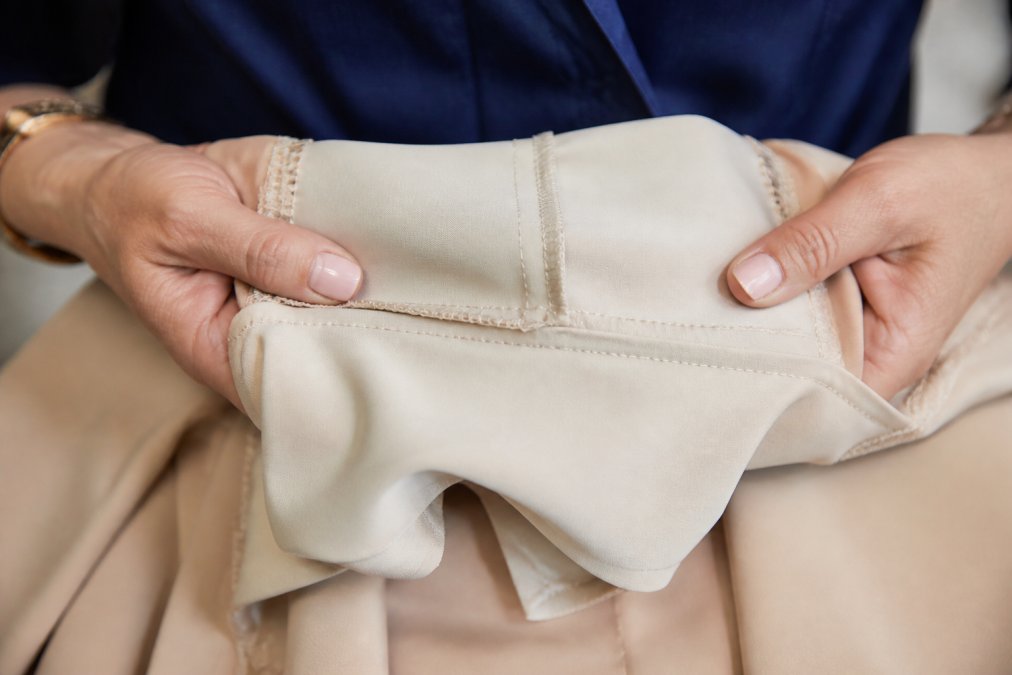
Inside-out inspection techniques
Turn the garment inside out and examine every seam. Quality stitching is consistent, tight, and straight. The thread should match the fabric colour (or be intentionally contrasting for design). Loose, uneven, or skipped stitches mean the garment will unravel with wear.
Count the stitches per inch. Quality garments often have a higher stitch density; cheap construction may have fewer. Higher stitch density means the seam is stronger and less likely to split. Look for reinforcement at stress points: underarm seams, crotch seams on trousers, and pocket corners should have double or triple stitching.
Check for loose threads hanging inside. A few is normal; many suggest rushed production. The seam allowance, the fabric between the stitching and the edge, should be generous. Narrow seam allowances can limit room for alterations if the garment needs tailoring.
Elizabeth Scott Melina Dress in Tuscan →
Seam allowance and reinforcement details
Seams are reinforced in different ways. Flat-felled seams (where the raw edge is folded and stitched twice) are stronger than simple seams. French seams, where the fabric is folded to enclose the raw edges, are delicate but beautiful and prevent fraying. Both indicate quality construction.
Look at hems. Quality hems are hand-stitched or machine-stitched with tiny, even stitches. A rolled hem on a delicate fabric shows attention to detail.
Evaluating Fit, Tailoring and Garment Construction
A perfectly constructed garment that doesn't fit is worthless. Quality clothing is designed with thoughtful proportions, not just cut to generic sizes. The way a garment hangs on your body reveals how well it's been engineered.
Hardware, Buttons and Closures
The smallest details often reveal the most about quality. Hardware, zips, buttons, hooks, and clasps, takes the most abuse and is the first thing to fail on poorly made garments. Quality hardware is substantial, well-finished, and built to last.
How to Care for Delicate Formal Wear
Investment pieces deserve investment in care. Formal wear, especially pieces made from natural fibres like the Italian linen dresses in our collection, needs proper maintenance to preserve quality and extend lifespan.

Quality Markers for Online and Second-Hand Shopping
Buying online removes the ability to touch fabric or examine construction in person. Second-hand shopping requires different evaluation skills. Both require you to be more deliberate about the markers of quality.
Price-to-Quality Ratio and Sustainable Investment Pieces
The most expensive clothing isn't always the best value. A $500 dress made from poor-quality fabric won't outperform a $200 piece engineered thoughtfully. Price-to-quality ratio is about understanding what you're paying for.
Frequently Asked Questions
How do I identify good quality clothing when shopping online?
Online shopping requires extra attention to fabric composition, thread count details, and customer reviews mentioning durability. Request close-up photos of seams and hems before purchasing. Check the fibre content label carefully, natural fibres like linen and cotton typically age better than synthetics. Look for brands that provide detailed care instructions and have clear return policies, which signals confidence in their garment construction quality.
What's the difference between natural and synthetic fabric quality?
Natural fibres like linen, cotton and wool offer superior breathability, durability and comfort, making them ideal for formal wear in warm climates. Synthetic blends can reduce wrinkles and shrinkage but often lack the longevity and hand-feel of pure natural fibres. Quality clothing typically uses high-grade natural fibres or carefully engineered synthetic blends rather than cheap polyester. Check fibre content labels, 100% linen or cotton pieces generally outperform synthetic alternatives for investment pieces.
How do I check for quality in seams and stitching?
Turn the garment inside out and inspect stitch density, quality pieces have tight, even stitching. Look for reinforced seams at stress points like underarms and side seams. Seam allowance should be generous to prevent fraying and allow for future alterations. Avoid puckered seams or loose threads. Double-stitched or topstitched seams indicate better garment construction and durability.
Why is fabric weight important when choosing durable clothing?
Fabric weight directly impacts durability, drape and longevity. Heavier fabrics resist pilling and wear better over time, especially in formal wear that endures repeated wearing and cleaning. Lightweight fabrics may feel luxurious initially but often deteriorate faster and show wear sooner. Quality formal dresses and tailored pieces use substantial fabric weight to maintain their shape and structure. Check the fabric specification or feel the weight in your hands, quality pieces have noticeable substance.
What should I look for in buttons and hardware on quality clothing?
Quality buttons are substantial, evenly attached and match the garment's aesthetic. Mother-of-pearl, bone or quality plastic buttons indicate better construction than flimsy plastic. Check that buttonholes are neatly finished with reinforced stitching. Metal zips should move smoothly without catching, and all hardware should feel secure and well-anchored. Poor-quality hardware often fails before the garment itself, so inspect closures carefully before purchasing.
How do I care for delicate formal wear to maintain quality?
Follow care instructions precisely, most quality formal pieces require gentle hand-washing or professional dry-cleaning. Store formal wear on padded hangers in breathable garment bags away from direct sunlight to prevent fading. For Italian linen pieces like designer maxi dresses, air-dry flat or hang to avoid shrinkage. Have repairs made promptly by a skilled tailor to prevent small damage from worsening. Proper care extends the lifespan of investment pieces significantly and preserves their appearance for years.
What makes second-hand or vintage clothing a quality investment?
Vintage pieces from established designers often demonstrate superior construction compared to modern fast fashion. Look for signs of minimal wear, intact seams, and original hardware. Check fibre content and construction quality using the same standards as new garments. Vintage linen and natural fibre pieces often improve with age, becoming softer and more comfortable. Reputable vintage retailers inspect garments thoroughly, making second-hand shopping a sustainable way to access quality pieces at better value.