
Table of Contents
- What Makes Clothing High Quality
- How to Spot Quality Stitching and Seam Integrity
- Understanding Fabric Composition and Natural Fabrics for Durability
- Reading Clothing Labels and Australian Label Requirements
- Evaluating Hardware, Buttons and Trim Quality
- Assessing Garment Construction and Finishing Details
- Testing for Durability: Colorfastness and Shrinkage Resistance
- Conclusion
- Frequently Asked Questions
Last Updated: September 25, 2026
What Makes Clothing High Quality
Quality clothing rests on three foundations: materials, construction, and durability. Learning to identify quality clothing by spotting these elements helps you make smarter purchases and keep your wardrobe longer.
High-quality garments start with better fabrics. Natural fibres like linen, cotton, and wool breathe better, age gracefully, and feel more luxurious than synthetics. How these materials are woven or knitted matters as much as the fibre itself.
Construction quality separates pieces that last from those that fall apart. A garment with reinforced seams and tight stitching almost always outlasts one without, regardless of price.
At Red Hill Collective, we focus on sourcing pieces that tick all these boxes. Our curated selection includes Italian-made designs like the Elizabeth Scott Melina Dress, crafted from 100% linen and constructed to last years, not seasons. When you invest in quality, you're buying pieces that reward that investment with longevity and style.

How to Spot Quality Stitching and Seam Integrity
Stitching is where quality becomes visible. Run your finger along a seam, it should feel smooth and tight, with no loose threads or gaps. Poorly stitched seams pucker, pull, or unravel within weeks.
Look for these specific signs of good seam construction:
- Stitch density: Seams should have 10-15 stitches per inch. Count them if you're unsure. Tight, close stitches hold fabric together far better than loose ones.
- Straight lines: Seams should run perfectly straight, not wavy or crooked. Machines and skilled hands both produce straight seams, poor quality often shows as uneven lines.
- Reinforced stress points: Wherever seams meet (armholes, crotch seams, side seams), look for a second row of stitching or a reinforcement bar. This prevents tears in high-stress areas.
- Hidden stitching: Inside hems and cuffs, stitching should be as neat as the outside. Sloppy interior work signals corners cut elsewhere.
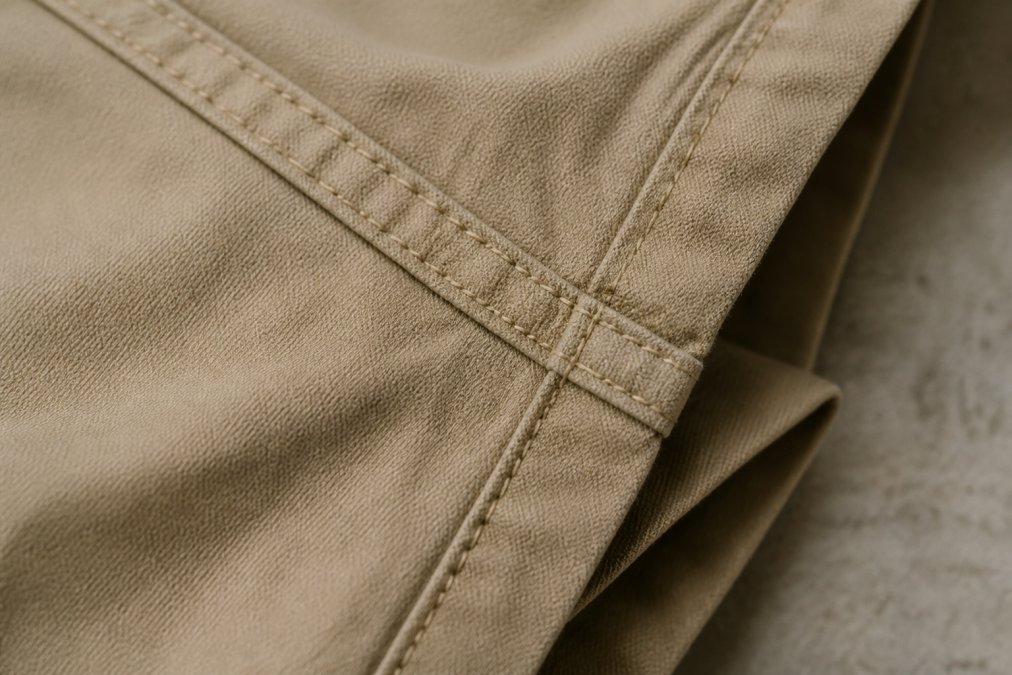
Check seams on the inside of the garment. Flip it inside out and inspect armhole, side, and hem seams. Quality brands invest in neat interior finishing because discerning shoppers look.
Understanding Fabric Composition and Natural Fabrics for Durability
Fibre content determines how a garment will perform. Check the label for the percentage breakdown, a 100% natural fibre garment behaves very differently from a blend.
Natural fibres that last:
- Linen: Breathes beautifully and becomes softer with every wash. It wrinkles easily but that's part of its charm. Linen pieces often outlast anything else in your wardrobe.
- Cotton: Durable, easy to care for, and universally flattering. Quality cotton (like Egyptian or Pima) resists pilling and holds colour better than cheaper varieties.
- Wool: Naturally resistant to wrinkles and stains. It regulates temperature and lasts for decades if cared for properly.
Synthetic blends aren't inherently bad, a 20% polyester blend can add durability and reduce wrinkles. But high synthetic content tends to pill, trap odours, and feel less comfortable against skin.
The Elizabeth Scott Melina Dress, for example, is 100% Italian linen. This means it will soften with wear, breathe in warm climates, and last through countless summers. That's worth the investment.

Reading Clothing Labels and Australian Label Requirements
Australian Consumer Law requires all garments to display fibre content, care instructions, and country of origin. A properly labelled garment tells you exactly what you're buying.
What to look for on the label:
- Fibre content: Must list every fibre above 2% by weight, in descending order. "100% linen" is clear. "60% cotton, 40% polyester" tells you exactly what you're getting.
- Care instructions: Symbols or written instructions should match the garment's construction. If a delicate dress says "machine wash warm," that's a red flag, it suggests the construction might not survive proper care.
- Country of origin: This must be stated clearly. Italian-made, Australian-made, and Chinese-made garments are not equivalent in quality, though all can be good. Know where your piece comes from.
- Brand and size: These should be clearly printed, not smudged or faded.
Labels printed with cheap ink that smudges suggest the manufacturer cut corners elsewhere. Quality brands invest in clear, durable labelling.
According to Australian Consumer Law guidelines on textile labelling, fibre content declarations must be accurate within strict tolerances. If a label says 100% linen, it must be exactly that, not 99% with undeclared content.
Evaluating Hardware, Buttons and Trim Quality
Hardware, buttons, zips, and trim, are the first components to fail on poorly made garments and the easiest to assess before purchase.
Buttons: Weight, Attachment, and Material
Feel the buttons directly. Quality buttons have noticeable weight; cheap plastic buttons feel hollow and snap within months. Natural materials, bone, wood, horn, or mother-of-pearl, indicate investment in durability. Metal buttons are more durable but can corrode if poorly finished.
Test attachment by gently tugging each button sideways. A quality button resists movement. Quality construction uses a thread shank, a small gap between button and fabric that prevents crushing. Buttons sewn flush to the fabric will fail faster.
Inspect the button hole. It should be cleanly finished with tight, even stitches. Fraying, loose threads, or an oversized hole indicates poor construction. The fabric should be reinforced on the underside.
Zips: Glide, Tape Integrity, and Slider Quality
Slide the zip up and down several times.
Trim, Lace, and Decorative Elements
Assessing Garment Construction and Finishing Details
Beyond seams and hardware, overall construction quality shows in details most people miss.
Check these finishing elements:
- Hems: Should be even in width and stitched with tiny, consistent stitches. A hand-stitched or blind-stitched hem is a sign of quality. Visible, uneven stitching or hems that are too narrow suggest cost-cutting.
- Armholes and necklines: These should be finished smoothly, not raw or bunched. Bias binding or a facing indicates proper construction. Rough edges mean the garment will irritate skin and fray with wear.
- Collar and cuff construction: Should be crisp and even. If a collar sits crooked or a cuff puckers, the garment was poorly cut or sewn.
- Lining: If present, should be fully attached and smooth. Loose lining or gaps between lining and outer fabric indicate rushed assembly.
Testing for Durability: Colorfastness and Shrinkage Resistance
A garment that fades after one wash or shrinks in the dryer isn't quality, regardless of how beautiful it looks new. But durability testing also connects to a broader question: how many times will you actually wear this piece before it becomes unwearable? That calculation, cost-per-wear, is where quality intersects with sustainability.
Colorfastness: Dye Quality and Longevity
Shrinkage: Pre-Shrinking and Fabric Stability
Pilling: Weave Density and Fibre Stability
The Sustainability Angle: Cost-Per-Wear and Environmental Impact
Conclusion
Learning to identify quality clothing takes practice, but the skills pay off immediately. Start by checking fibre content, examining seams closely, and testing hardware. Look at finishing details and ask whether a garment will improve or deteriorate with wear.
Frequently Asked Questions
How can you tell if clothing is high quality?
High-quality clothing shows consistent, tight stitching with no loose threads, uses natural or quality blended fabrics, and has reinforced seams at stress points. Check that buttons are securely attached, hems are even, and the garment holds its shape. Read the label to verify fibre content and country of origin. Quality pieces also feature proper lining, finished edges, and hardware that feels substantial. Examine the overall weight and drape of the fabric, premium garments typically feel more substantial in your hands.
What should I look for in clothing labels according to Australian standards?
Australian Consumer Law requires clothing labels to display fibre content, care instructions, and the supplier's name and address. Fibre content must be listed in descending order by weight percentage. Labels should clearly state whether the garment is made from natural fibres (cotton, linen, wool) or synthetics (polyester, nylon). Check that percentages add up to 100%, and avoid garments with vague labels listing 'other fibres' without specifics. Genuine designer pieces and quality retailers always provide complete, legible labelling that meets these requirements.
Is 100% natural fibre or a blend better for durability?
Both can be durable depending on the blend. Pure natural fibres like 100% Italian linen or high-quality cotton offer breathability and longevity, particularly in warm climates. However, strategic blends, such as 85% cotton with 15% elastane, add stretch and recovery without sacrificing durability. Avoid extremely low natural fibre percentages (below 50%) paired with cheap synthetics. Quality matters more than the ratio; premium 80/20 blends often outperform poor-quality 100% natural options. For formal wear in warm weather, linen and cotton blends provide both comfort and lasting wear.
What are the signs of poor-quality construction in clothing?
Poor construction includes uneven or loose stitching, puckered seams, and visible thread knots inside the garment. Buttons that are glued rather than sewn, misaligned hems, and fraying edges indicate rushed manufacturing. Check that linings are properly attached and don't shift when you move the garment. Zips should glide smoothly without catching. Cheap fabrics pill easily or lose colour after one wash. Seams that are single-stitched rather than reinforced at stress points (underarms, crotch, shoulder seams) will fail quickly. Finally, garments that feel thin or flimsy in hand typically won't withstand repeated wear.
Quality matters most when you're investing in pieces you'll wear regularly. At Red Hill Collective, our curated selection focuses on garments built to last, like our Italian linen dresses that become softer and more beautiful each season. We offer personal styling services to help you choose pieces that work for your lifestyle and body, ensuring every purchase is one you'll love wearing for years. Shop All and discover the difference quality makes.